Nova Clean Liverpool
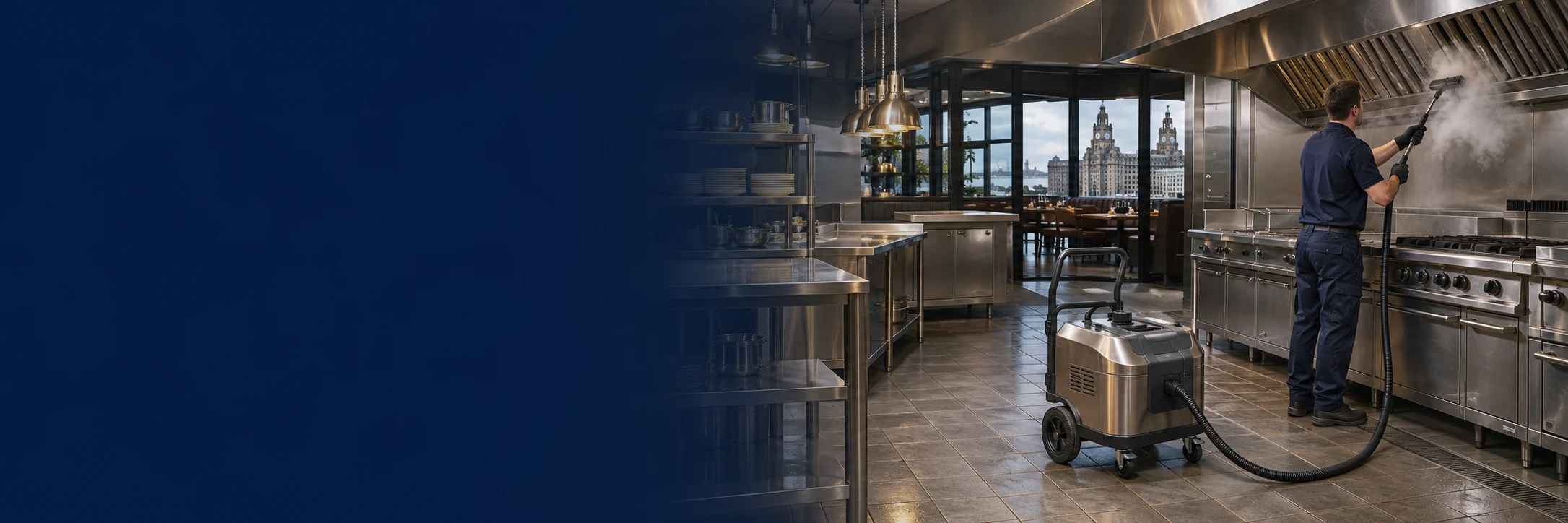
Commercial kitchen deep cleaning in Liverpool
Tackle grease and residue in cooking areas, food preparation zones and on floors.
NOVA CLEAN LIVERPOOL · MERSEYSIDE
Commercial kitchen deep cleaning in Liverpool for restaurants, catering teams and managed premises
A kitchen can look ready for service while grease remains behind equipment, residues collect around fittings and difficult edges escape the daily cleaning routine. NOVA CLEAN Liverpool discusses commercial kitchen deep cleaning for restaurants, cafes, takeaways, hospitality venues and other food businesses across Liverpool and Merseyside. The work begins with the layout, the cooking activity and the specific areas that need attention, so you can compare a defined specification with the needs of your operation.
A periodic deep clean should support the everyday cleaning programme rather than replace it. Tell us whether you are preparing for reopening, taking over a kitchen, planning maintenance or addressing a particular accumulation. The number of covers served does not describe the full task: a compact takeaway with intensive frying can present a different workload from a larger preparation kitchen. We discuss the actual condition, accessible equipment and available shutdown period before confirming the proposed scope.
Start with a kitchen inventory and a realistic shutdown window
The most useful first description follows the working route through the kitchen. Identify preparation counters, cooking equipment, wash-up areas, cold storage, shelving and the floor surfaces around them. Include the approximate dimensions and explain which pieces are fixed, mobile or connected to services. Photographs should show the relationship between equipment and walls, rather than only a close view of a dirty corner, because access often determines what can be cleaned without another trade.
Next, establish when the area will genuinely be available. The end of food service is not always the start of cleaning access if staff still need the kitchen for washing up, stock handling or preparation. Explain the time for entry, the intended handover and any neighbouring premises that could be affected by movement or noise. A useful programme allows for preparation, the agreed work and the checks needed before the kitchen returns to normal use.
Distinguishing surface cleaning from targeted disinfection
Grease removal, washing and disinfection have different functions. The Food Standards Agency describes cleaning and disinfection as a planned process using suitable products in accordance with their instructions. A food business should know which surfaces need each treatment and how its regular schedule will be maintained. A disinfectant applied over an unremoved layer of grease is not a substitute for properly cleaning the surface first.
For the commissioned deep clean, specify which food-contact surfaces and touch points are included. Any product selection should account for the material, the food environment and the instructions for application, contact time and any necessary rinsing. The business remains responsible for its wider food-safety arrangements. A contractor should describe the work performed accurately, rather than promise a particular hygiene rating or imply that a cleaning visit settles every operational requirement.
Degreasing cooking lines and the surfaces around them
Cooking-line cleaning can involve equipment exteriors, accessible surrounds, splashbacks and areas where greasy deposits have accumulated. The suitability of a product and method depends on the finish and the condition of the equipment. Stainless steel, aluminium, painted panels and seals require different care. Tell us about manufacturer instructions, unusual coatings and any parts that should not be exposed to moisture or a particular cleaning product.
A quotation must distinguish between cleaning an appliance externally and dismantling or servicing it. Removing panels, disconnecting gas or electrical supplies and making equipment operational again can require a suitably qualified professional. These activities should not be assumed to fall within a general kitchen clean. If moving an appliance is necessary to reach the floor or wall behind it, identify who will carry out that movement and confirm that the connections can be managed appropriately.
Extraction canopies, filters and ductwork need separate boundaries
A request for kitchen deep cleaning often includes a concern about grease around the extraction canopy. The visible canopy, removable filters, the plenum and the wider ductwork are different parts of the system, with different access requirements. Describe the component you want assessed and provide any existing maintenance records. A statement that the kitchen has been cleaned should not be used as evidence that concealed extraction ductwork has been inspected or treated.
Where specialist extraction cleaning is required, its extent, access points and reporting should be agreed separately. Check any relevant lease, maintenance or insurance requirements with the person responsible for the premises. NOVA CLEAN will discuss whether the requested work falls within the proposed attendance or needs another specialist. We do not assume that a standard deep clean includes a duct survey, fire-safety assessment or certification for equipment beyond the agreed scope.
Floors, edges and low-level details in busy food premises
A kitchen floor needs assessment beyond its visible central walkway. Edges under benches, corners around plinths and accessible areas near equipment can hold residues that ordinary mopping does not remove. Identify the floor finish and explain whether there are damaged joints, loose tiles or areas where water remains. A cleaning method should suit the surface and should not conceal a drainage or maintenance problem that needs another contractor.
The work plan should explain how loosened residues and wash water will be managed. It should also account for cables, service connections and equipment that cannot be moved. For a basement kitchen in the city centre, the route for bringing in machines may be as significant as the room size. In a larger ground-floor catering unit, the priority may be sequencing zones so the whole area can be reviewed before the next production period.
Preparation counters, shelving and storage areas
Tell us which cupboards, shelving and storage units will be emptied before attendance. An internal clean cannot be assumed if containers and stock remain in place, and the person responsible for the kitchen should retain control of food and ingredients. Separate the handling of food from the cleaning specification, including where items will be stored and who will return them after the surfaces have been checked and are ready for use.
Accessible shelving, cupboard interiors and work surfaces can then be described by material and condition. Adhesive residues, ingrained marks and worn finishes may need different consideration from removable food deposits. A detailed handover should make that difference clear. If there are delicate labels, calibration marks or operating instructions on equipment, identify them before cleaning so they are not treated as disposable stickers or ordinary residue.
Refrigeration and cold storage require coordinated preparation
A refrigeration enquiry should identify the units, their condition and whether you want the interior, exterior or surrounding area cleaned. Emptying units, managing food temperatures and arranging any shutdown remain operational decisions for the business. The cleaning team needs a clear agreement about when each unit will be available and who will confirm its readiness. An appliance should not be taken out of use simply because it appears on a general equipment list.
Seals, shelving, drain details and vulnerable electrical parts need material-specific care. Cleaning is distinct from refrigeration maintenance, fault finding or performance testing. If there is an existing leak, damaged seal or recurring residue, explain it at the outset rather than assuming the clean will resolve the cause. Any technician needed for disconnection, repair or recommissioning should be coordinated with the cleaning programme, with responsibilities recorded before the appointment.
Restaurants and catering businesses across Liverpool
Liverpool kitchens operate in varied settings, from compact premises around Bold Street and Ropewalks to hospitality venues near the waterfront, neighbourhood cafes in Allerton and takeaways serving Wavertree or Anfield. The location helps plan attendance, but it does not determine the cleaning method. Shared access, a rear service yard, a basement stair and the available loading space can each influence the equipment and working sequence.
We also discuss enquiries for managed catering facilities, event venues and other commercial kitchens where the responsible manager can define access and shutdown arrangements. For Bootle, Huyton, Crosby, Kirkby, Prescot and the surrounding Merseyside area, provide the full postcode and the type of premises. If you operate several kitchens, list each location separately so the quotation reflects the layout, cooking activity and condition of each operation rather than a single assumed package.
What to prepare before a scheduled kitchen deep clean
Nominate a contact who can approve the scope and answer practical questions during the work. Agree which food, utensils and loose equipment must be removed, which units will be empty and which services will be available. Provide operating and care information where it affects the cleaning method. If a contractor needs to disconnect or move equipment, confirm that arrangement before attendance rather than relying on an informal decision made once cleaning has started.
Explain any restrictions on security, alarms, delivery doors and staff movement. A kitchen inside a larger building may have different rules from an independent restaurant, and those rules should be shared early. Where work takes place outside normal hours, identify who will open and close the building and who will inspect the result. Leave enough time for that handover instead of assuming the premises can immediately return to production without a review.
Comparing prices by specification rather than by kitchen size alone
The price depends on the equipment count, degree of grease accumulation, required detailing, accessible surfaces and the time available. A kitchen that has been emptied and prepared presents a different scope from one containing stock and fixed equipment with limited clearance. Work at unusual hours, additional access equipment or separately agreed specialist treatments can also affect the programme. These factors should be stated clearly in the quotation.
Ask which items are included internally, which are external-only and which areas are excluded. Check whether the specification covers wall finishes, floor edges, shelving, canopy surfaces and agreed touch points. If a deadline is linked to reopening or a tenancy handover, explain it before a date is reserved. A reliable price comparison uses the same assumptions for each contractor, with any change in the condition or requested work agreed before additional tasks proceed.
Records and checks that make the handover useful
At the end of the intervention, compare the kitchen against the agreed inventory and cleaning tasks. Review the cooking line, preparation areas and the accessible surfaces included in the quotation. Discuss any residual mark or inaccessible detail while its location is visible. A worn floor, damaged coating or defective appliance should be identified as a maintenance matter rather than described as removable dirt that another cleaning pass will necessarily solve.
Keep the agreed specification with your maintenance and cleaning records. If extraction work was commissioned separately, retain that report as a separate record with its own scope. The next daily cleaning schedule should reflect how the kitchen is actually used, including the areas that need more frequent attention. A periodic deep clean is most useful when the handover helps the business maintain the result and identify the next practical maintenance priority.
Questions about commercial kitchen cleaning in Liverpool
Can you work while the kitchen stays in service? Explain the operational requirement first. Some work needs a clear shutdown or separation of areas, and a programme should only be confirmed when the necessary access and controls are achievable. A service deadline cannot override the need to prepare equipment and protect food handling.
Does a deep clean include the full extraction system? Only where that specialist scope has been explicitly assessed and agreed. Visible canopy cleaning does not automatically cover concealed ductwork, fans or every section of an extraction installation. Check the quotation and any separate reporting requirements before booking.
Can you quote before a takeover or reopening? Send photographs, an equipment list, the postcode and your proposed access dates. Further assessment may be needed if the premises are occupied or equipment conceals the affected surfaces. The final quotation should identify the assumptions that must be met before the agreed work begins.
To discuss commercial kitchen deep cleaning, contact NOVA CLEAN Liverpool with the layout, the cooking activity, photographs and the available shutdown period. We will establish the information required for a clear specification, suitable preparation and a practical handover.
Discuss your Liverpool cleaning project
Send your postcode, the affected areas and your access requirements for an assessment and a detailed quotation.